
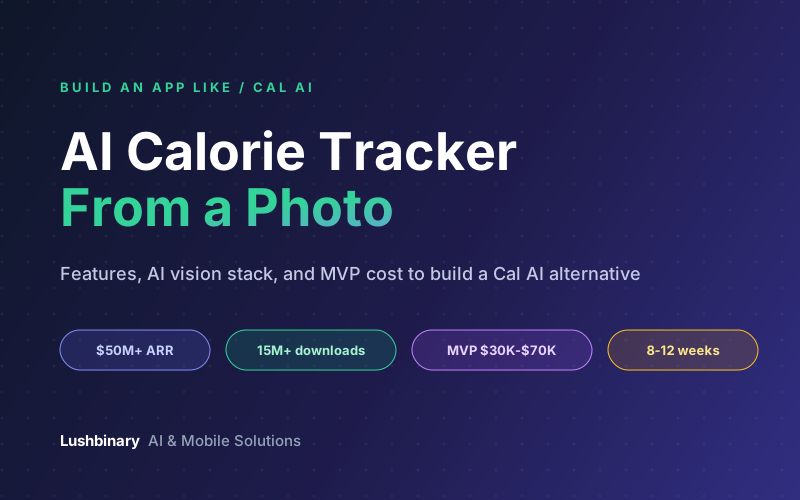
Cal AI went from zero to over $50 million in ARR in roughly 18 months, racked up more than 15 million downloads, and was acquired by MyFitnessPal in March 2026. It was built by two teenagers around one deceptively simple idea: point your phone at a plate of food and get an instant calorie and macro breakdown. No tedious searching, no weighing, no manual entry. That single workflow turned a crowded calorie-counting category upside down.
The opportunity has not closed. The acquisition consolidated Cal AI into MyFitnessPal, but users still complain about the same things: photo estimates that are off by 25-35% on mixed meals, dynamic pricing that quietly raises the annual fee, a thin free tier, and weak support for specific diets and non-Western foods. Every one of those complaints is a wedge for a focused competitor.
This guide breaks down what made Cal AI work, how it monetized, the gaps you can exploit, the features you need for an MVP, the tech stack and architecture, the AI capabilities that actually move accuracy, how much it costs to build, and how Lushbinary can help you ship it.
📋 Table of Contents
- 1.What Makes Cal AI Successful
- 2.Cal AI’s Revenue Model & Pricing
- 3.User Complaints & Market Gaps You Can Exploit
- 4.Core Features for a Calorie Tracker MVP
- 5.System Architecture & Tech Stack
- 6.AI-Powered Features That Differentiate
- 7.Development Cost & Timeline Breakdown
- 8.Why Lushbinary for Your Calorie Tracker MVP
1What Makes Cal AI Successful
Cal AI did not win because it had the biggest food database. It won because it removed the single biggest reason people abandon calorie trackers: manual logging. By making the core action a photo, it cut the time-to-log from minutes to seconds and made a chore feel almost fun.
Photo-First Logging
Snap a meal, get calories, protein, carbs, and fat in seconds. This is the entire product in one gesture. Everything else - dashboards, streaks, goals - exists to support that core loop. If your alternative does not nail fast, low-friction photo logging, nothing else matters.
Aggressive, Authentic Distribution
Cal AI grew through relentless short-form video on TikTok, Instagram Reels, and YouTube Shorts, much of it founder-led and creator-driven. The product is inherently demoable: a 10-second clip of pointing a phone at food and getting numbers back is a perfect hook. The lesson for a clone is that the growth engine is as important as the app.
Polished Onboarding and Habit Loops
A short lifestyle questionnaire builds a personalized plan, then streaks, daily targets, and progress charts keep users coming back. Cal AI reported retention above 30%, which is strong for a consumer health app. Onboarding that produces a believable, personalized number on day one is what converts a download into a subscriber.
| Metric | Cal AI |
|---|---|
| Peak ARR (pre-acquisition) | $50M+ |
| Downloads | 15M+ |
| Subscription Price | ~$2.49/mo or $29.99/yr |
| App Store Rating | 4.8 (283K+ ratings) |
| Retention | 30%+ |
| Launched | May 2024 |
| Acquired By | MyFitnessPal (March 2026) |
| Built By | Two teenage founders |
2Cal AI's Revenue Model & Pricing
Cal AI runs a straightforward consumer subscription with a tight free experience and a low monthly price designed for impulse conversion after a strong onboarding moment.
| Plan | Price | Notes |
|---|---|---|
| Monthly | ~$2.49/month | Low entry price to convert after onboarding |
| Annual | ~$29.99/year | Listed price; reported $19.99-$49.99 via dynamic pricing |
| Free | Limited | A few scans, then a paywall for full tracking |
The model works because the price is low enough to be an impulse buy and the value is demonstrated before the paywall. The math is volume: 15 million-plus downloads at even a few percent paid conversion at $30/year compounds quickly. The B2B angle that the original largely ignored is partnerships with gyms, dietitians, corporate wellness programs, and GLP-1 / weight-loss clinics that need food logging baked into their own apps.
💡 Revenue Opportunity
Pair a low consumer subscription with a white-label or API tier for clinics and wellness programs. The GLP-1 wave has created millions of new users who need to track protein and calories under medical guidance, and most clinics have no good logging tool. That is a higher-margin, stickier revenue stream than consumer subscriptions alone.
3User Complaints & Market Gaps You Can Exploit
We reviewed app store reviews, Reddit threads, and teardown articles. The same friction points come up again and again. Each is a feature opportunity for a focused alternative.
🎯 Accuracy on Mixed Meals
Photo estimates run 25-35% off on stews, casseroles, wrapped foods, and anything where ingredients are hidden. Users learn not to trust the number, which undermines the whole product.
💸 Dynamic Pricing Frustration
The listed $29.99/year quietly becomes $39.99 or $49.99 for some users. Surprise pricing at the paywall generates refund requests and one-star reviews.
🔒 Thin Free Tier
Only a handful of scans before a hard paywall. Users want to evaluate accuracy on their own food before paying, and a stingy trial loses skeptics.
🌍 Limited Non-Western Foods
Recognition and database coverage skew toward US and European foods. Indian, East Asian, African, and Latin American dishes get misidentified or estimated poorly.
⌚ Weak Wearable & Health Integration
Limited two-way sync with Apple Health, Health Connect, and CGMs. Users juggling fitness, sleep, and glucose data want one connected picture.
🥗 No Diet-Specific Intelligence
Keto, diabetic, bodybuilding, and medical diets need more than calories. Macro targets, fiber, sodium, and net carbs matter, and generic tracking ignores them.
💡 The Opportunity
The biggest gap is trustworthy accuracy for a specific audience. A tracker that nails a single niche - say high-protein logging for GLP-1 users, or regional cuisine for a specific market - and lets people confirm and correct estimates can win loyalty that a generic clone never will. Accuracy plus a generous, honest free tier beats raw feature count.
4Core Features for a Calorie Tracker MVP
Phase 1: Lean MVP (8-12 weeks)
- Photo Food Logging - Snap a meal, run it through a vision model, return calories and macros with a confidence indicator and an easy edit step
- Barcode & Search Fallback - Scan packaged foods and search a nutrition database so users always have a reliable path when the photo estimate is uncertain
- Onboarding & Goals - A short questionnaire that sets calorie and macro targets based on goal, weight, and activity
- Daily Dashboard - Calories remaining, macro rings, and a meal timeline that updates in real time
- Subscription & Paywall - RevenueCat-managed subscriptions with a clean, honest paywall and a meaningful free trial
- Streaks & Reminders - Push notifications and streaks to drive the daily logging habit
Phase 2: Differentiation (8-12 weeks)
- Apple Health & Health Connect Sync - Two-way sync for weight, steps, workouts, and energy burned
- Diet Modes - Keto, high-protein, diabetic-friendly, and bodybuilding presets with the right targets and warnings
- Recipe & Meal Builder - Save custom meals and recipes so repeat foods log in one tap
- Progress Reports - Weekly trends for weight, intake adherence, and macro balance
- Regional Food Packs - Curated databases and tuned recognition for specific cuisines and markets
Phase 3: AI & Scale (10-14 weeks)
- Portion Estimation - Use depth data and reference objects to improve portion accuracy, the single biggest error source
- AI Coaching - Personalized nudges and a chat assistant that answers food and goal questions in plain language
- CGM & Clinic Mode - Glucose integration and a provider dashboard for dietitians and weight-loss clinics
- White-Label API - Expose food recognition and logging as an API for partners and wellness programs
5System Architecture & Tech Stack
A photo calorie app has three hard problems: food recognition (turning a picture into a structured food estimate), nutrition data (mapping that food to accurate calories and macros), and fast, reliable mobile UX (the loop has to feel instant). Here is the architecture we recommend.
Recommended Tech Stack
| Layer | Technology | Why |
|---|---|---|
| Mobile | React Native or Flutter | One codebase for iOS and Android with native camera access |
| Food Recognition | GPT-4o / Gemini vision or fine-tuned model | Multimodal models identify foods and estimate portions from a photo |
| Nutrition Data | USDA FoodData Central, Nutritionix, Open Food Facts | Authoritative calorie and macro values plus barcode coverage |
| Backend | Node.js (Fastify) or Python (FastAPI) | Fast async APIs for image processing and logging |
| Database | PostgreSQL + Redis | Structured logs and fast caching of common foods |
| Subscriptions | RevenueCat | Cross-platform billing, paywalls, and entitlement management |
| Storage | AWS S3 + CloudFront | Meal photo storage and fast delivery |
| Health Sync | Apple HealthKit, Android Health Connect | Two-way sync for weight, activity, and energy |
For deeper guidance on the subscription layer, see our RevenueCat integration guide and our health and performance iOS app guide.
6AI-Powered Features That Differentiate
AI is what makes a calorie tracker feel magical, but it is also where most clones fail. The difference between a toy and a trusted product is how you handle uncertainty.
📷 Multimodal Food Recognition
Use a vision model to identify multiple foods in one photo, estimate portions, and return structured items the user can confirm. Always show a confidence level instead of a single false-precise number.
📏 Portion Estimation
Portion size is the largest error source. Use device depth sensors, plate-size references, and follow-up prompts ('half a cup or a full cup?') to tighten the estimate before logging.
💬 Conversational Logging
Let users type or speak 'two eggs and toast with butter' and parse it into logged items. Natural language logging covers the cases where a photo is awkward.
🧠 Personalized Coaching
An assistant that reviews the week and gives one or two concrete, kind suggestions beats a wall of charts. Frame it around the user's actual goal, not generic advice.
🔁 Learning From Corrections
Every time a user edits an estimate, capture it. Personalize recognition to the foods they eat most and feed aggregate corrections back into model tuning.
🌍 Cuisine-Aware Models
Fine-tune or prompt-engineer for specific cuisines so regional dishes are recognized correctly. This is a defensible edge against a one-size-fits-all incumbent.
7Development Cost & Timeline Breakdown
A calorie tracker MVP is moderately complex because the AI accuracy work, nutrition data licensing, and cross-platform mobile polish all take real effort. Here is a realistic breakdown.
Get Detailed Cost Breakdown
Fill in your details to unlock pricing and cost information.
8Why Lushbinary for Your Calorie Tracker MVP
At Lushbinary, we build AI-powered mobile apps that ship and scale. Here is what we bring to a calorie tracker project:
- AI vision integration - We build and tune food recognition pipelines with confidence handling, portion estimation, and graceful fallbacks so the numbers stay trustworthy
- Cross-platform mobile - We ship React Native and Flutter apps with fast camera flows, offline logging, and native HealthKit and Health Connect sync
- Subscription expertise - We implement RevenueCat paywalls, trials, and pricing experiments that convert without the dark-pattern backlash
- Cost-aware AI - We route between small and frontier models and cache aggressively to keep per-scan inference costs low
- Speed to market - We use AI coding tools to ship MVPs 30-40% faster without cutting corners on quality
🚀 Free Consultation
Want to build a calorie tracker that actually competes? Lushbinary specializes in AI-powered mobile MVPs. We'll scope your project, recommend the right tech stack, and give you a realistic timeline with no obligation.
❓ Frequently Asked Questions
How much does it cost to build an AI calorie tracker app like Cal AI?
An MVP with photo logging, a nutrition database, and subscription billing costs $30,000-$70,000 over 8-12 weeks. A full-featured app with custom recognition models, wearable sync, and coaching ranges from $90,000-$200,000 over 6-10 months.
How does Cal AI make money?
A consumer subscription priced around $2.49/month or $29.99/year, with dynamic pricing by market. It reached $50M+ ARR and 15M+ downloads in under two years before MyFitnessPal acquired it in March 2026.
What tech stack should I use to build a Cal AI alternative?
React Native or Flutter for mobile, a vision model (GPT-4o or Gemini) for food recognition, a nutrition database like USDA FoodData Central or Nutritionix, Node.js for the backend, PostgreSQL for data, and RevenueCat for subscriptions.
How accurate is AI photo calorie counting?
About 10% off on simple single-ingredient meals and 25-35% off on mixed dishes. Accuracy improves with portion prompts, barcode fallback, and letting users confirm or correct the estimate before logging.
Can a new calorie tracker app still compete after the Cal AI acquisition?
Yes. The market is large and growing, and the acquisition leaves room for niche players focused on specific diets, regional foods, better accuracy, or a generous free tier.
📚 Sources
- TechCrunch - Cal AI built by two teenagers - Downloads, revenue, and retention data
- Cal AI on the App Store - Ratings and feature description
- USDA FoodData Central - Nutrition database for calorie and macro values
Content was rephrased for compliance with licensing restrictions. Revenue, download, and pricing data sourced from public reporting and official app store listings as of May 2026. Figures may change - always verify current numbers before relying on them.
Build an AI Calorie Tracker People Actually Trust
Accurate photo logging, honest pricing, and the diet-specific intelligence Cal AI never shipped. Let Lushbinary build your calorie tracker MVP.
Ready to Build Something Great?
Get a free 30-minute strategy call. We'll map out your project, timeline, and tech stack - no strings attached.
Prefer email? Reach us directly: