
Insights on AI, Cloud
& Modern Engineering
We write about AI agents, cloud architecture, cost optimization, and the tools we use every day to build software.
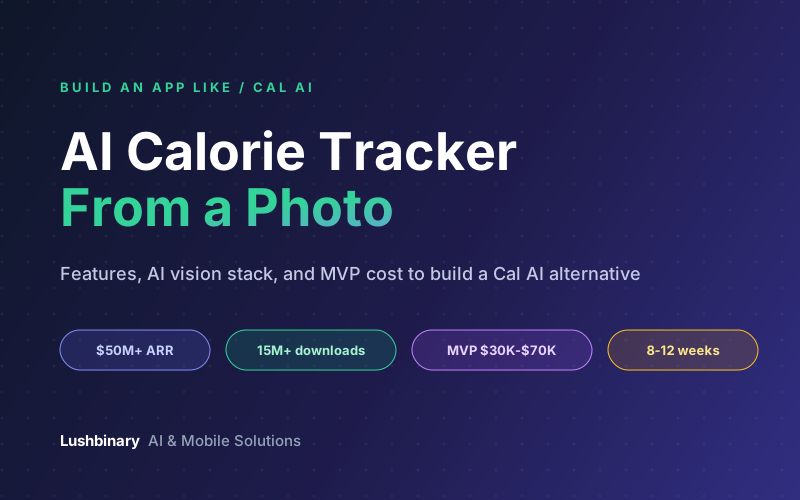
How to Build an AI Calorie Tracker App Like Cal AI: Features, Tech Stack & MVP Cost
Cal AI hit $50M+ ARR and 15M+ downloads before MyFitnessPal acquired it. This guide breaks down the photo-logging model, the accuracy and pricing gaps you can exploit, the MVP features, the AI vision architecture, and what it costs to build a calorie tracker that competes.
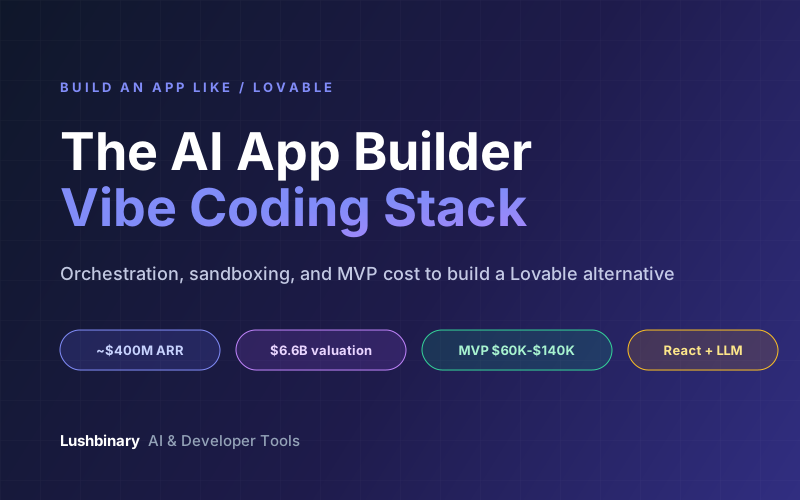
How to Build an AI App Builder Like Lovable: Architecture, Tech Stack & Cost
Lovable hit ~$400M ARR and a $6.6B valuation by turning prompts into deployed apps. This guide breaks down the vibe-coding model, the credit-burn and quality gaps you can exploit, the orchestration architecture, and what it costs to build an AI app builder that ships clean code.
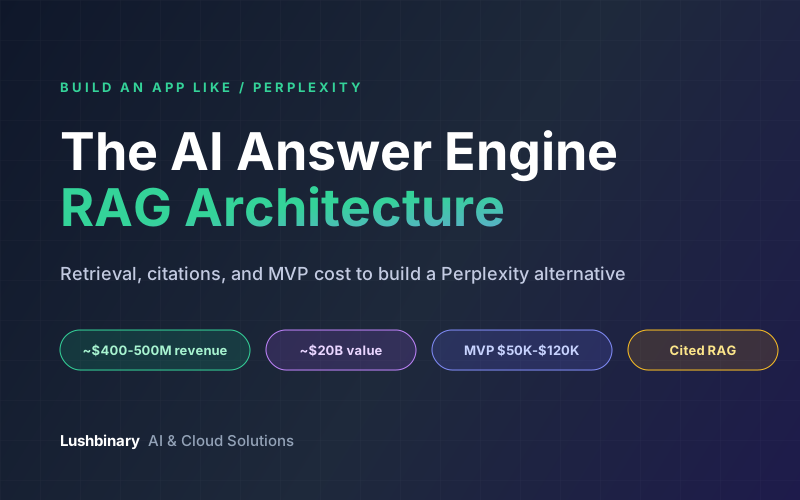
How to Build an AI Answer Engine Like Perplexity: RAG Architecture & Cost
Perplexity reached ~$400-500M annualized revenue at a ~$20B valuation by citing its answers. This guide breaks down the answer-engine model, the hallucination and citation gaps you can exploit, the RAG architecture, and what it costs to build a Perplexity alternative for a vertical.
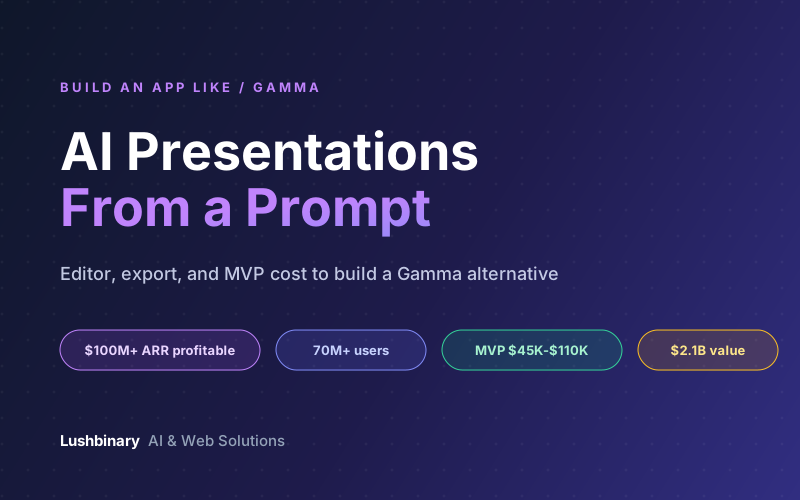
How to Build an AI Presentation Tool Like Gamma: Features, Stack & Cost
Gamma crossed $100M+ ARR profitably at a $2.1B valuation with 70M+ users. This guide breaks down the prompt-to-deck model, the design-control and export gaps you can exploit, the editor architecture, and what it costs to build an AI presentation tool that stays on brand.
How to Build an AI Avatar Video Tool Like HeyGen: Architecture & Cost
HeyGen grew from ~$1M to ~$100M ARR by turning scripts into avatar videos. This guide breaks down the script-to-video model, the avatar-quality and pricing gaps you can exploit, the GPU render architecture, and what it costs to build an AI video tool for your niche.
Prepare Your Codebase for Claude Mythos: AI Vulnerability Discovery Readiness
Claude Mythos found zero-days in every major OS and browser, including a 27-year-old OpenBSD bug, and Anthropic says Mythos-class models are coming to all customers in weeks. This is the engineering readiness guide: run frontier models against your own code now, attack memory-unsafe paths first, treat N-days as urgent, favor hard barriers over friction, and build an AI security review pipeline. Includes a 30-day plan.
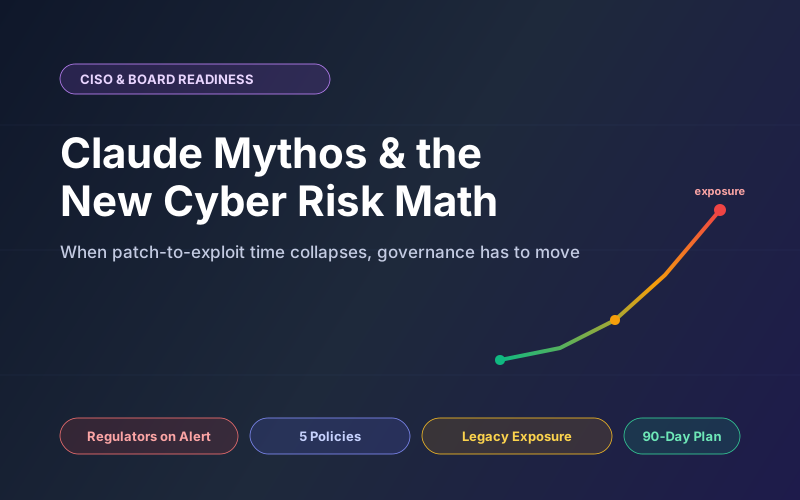
Claude Mythos for CISOs & Boards: The Cyber Risk Readiness Guide
When Anthropic disclosed Claude Mythos, Treasury Secretary Bessent and Fed Chair Powell warned bank CEOs, and central banks worldwide held emergency briefings. This is the governance guide: what changed, why regulators reacted, the new risk math, your legacy-system exposure, five policies to refresh, what to put in front of the board, and a 90-day roadmap to a funded resilience program.
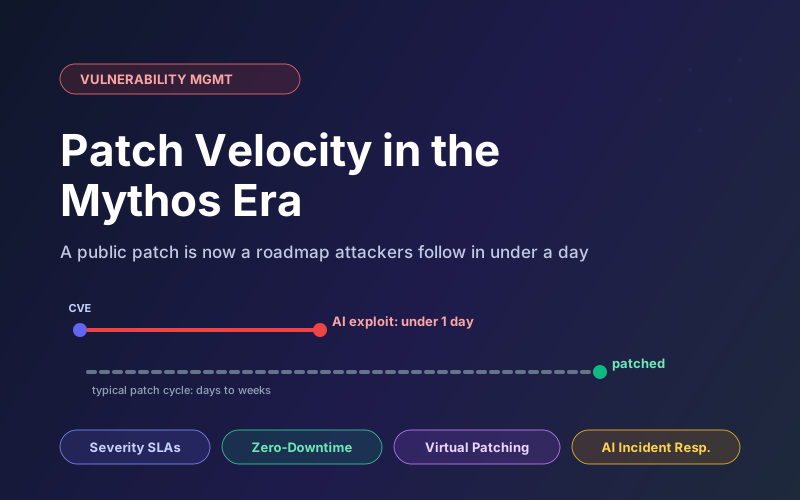
Patch Velocity in the Mythos Era: The N-Day Vulnerability Management Guide
Anthropic gave Claude Mythos 100 known Linux CVEs and it wrote working exploits for more than half, in under a day each, from just the public patch. A patch is now a roadmap attackers follow faster than you can upgrade. This guide covers why N-days became the bigger threat, the collapsed disclosure-to-exploit window, patch SLAs you can hit, zero-downtime deploys, virtual patching, and AI-assisted incident response.
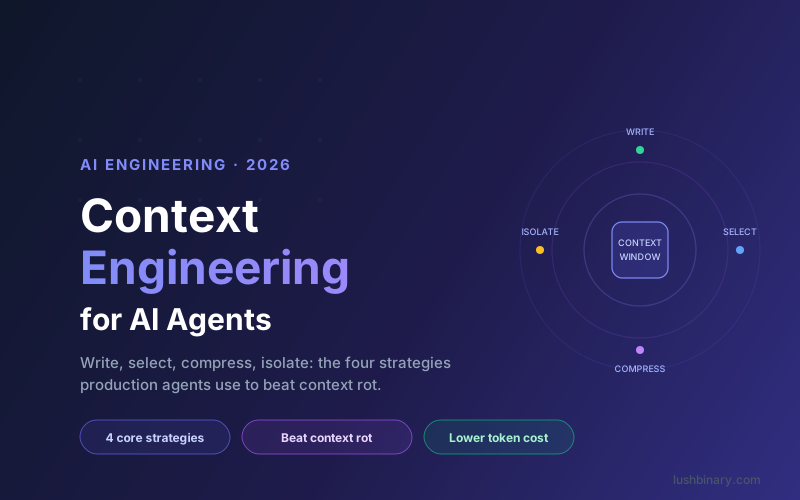
Context Engineering for AI Agents: The Production Guide for 2026
The biggest reason AI agents fail in production is bad context, not a weak model. Context engineering is the defining skill of AI engineering in 2026. This guide breaks down what it actually is, why million-token windows do not fix context rot, the four core strategies (write, select, compress, isolate), a reference context architecture, the anti-patterns that break agents, and how to measure context quality.
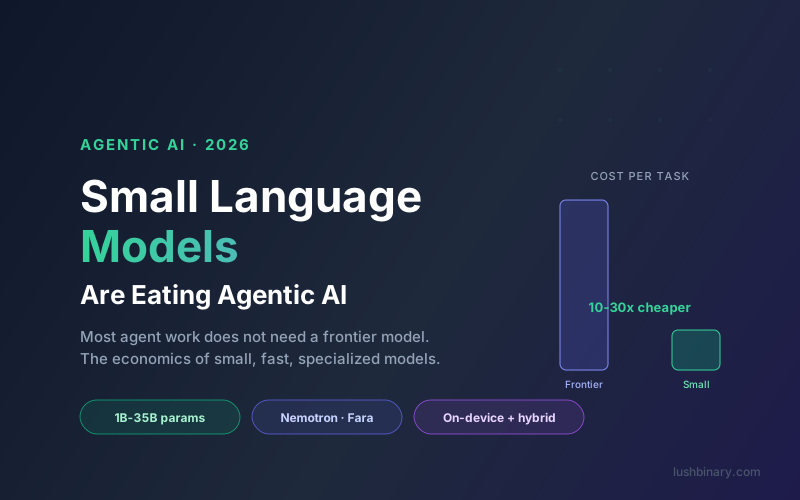
Small Language Models Are Eating Agentic AI: The 2026 Cost Guide
NVIDIA's own research says most agentic AI work in 2026 does not need a frontier model, it needs a small, fast, well-orchestrated one. The economics favor small models by 10x to 30x on repetitive tasks. This guide makes the case for SLMs, defines what counts as small, covers leading models like Nemotron and Fara-7B, the heterogeneous architecture, and a migration path from an all-frontier stack to a cost-aware hybrid.
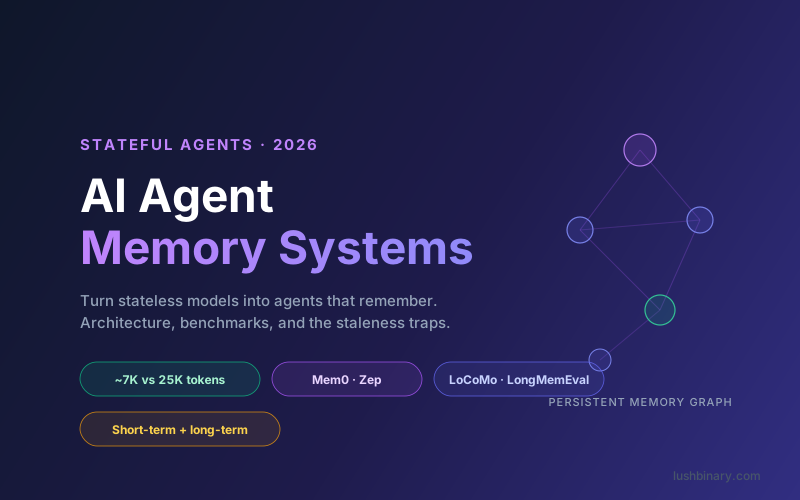
AI Agent Memory Systems: Architecture, Benchmarks & Production Guide
An LLM is stateless and forgets everything when a session ends. In 2026, agent memory became a first-class architectural component with its own benchmarks and ecosystem. This guide covers the types of memory, why a long context window is not a substitute (fact-based memory hits comparable accuracy at 3-4x fewer tokens), a reference architecture, tools like Mem0 and Zep, and the staleness and decay pitfalls that break memory in production.
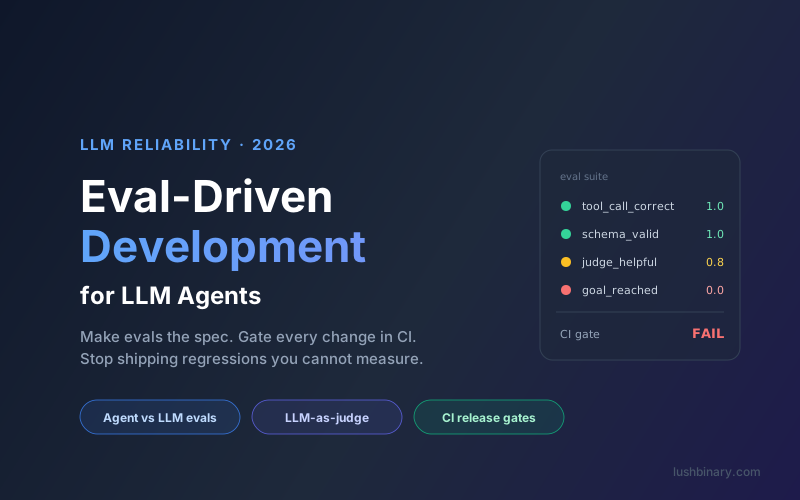
Eval-Driven Development for LLM Agents: The 2026 Production Guide
Most teams ship LLM features by tweaking a prompt and eyeballing a few examples. It works until it does not. Eval-driven development makes evaluations the working spec you test every change against. This guide covers what evals are, why agent evaluation is harder than scoring single responses, the grading methods that work, how to gate releases in CI, online evals, and how to start without boiling the ocean.
Ship Better Engineering, Every Week
Practical writing on AI agents, cloud architecture, and product teardowns. Read by builders at startups and Fortune 500s.
- New deep-dives on AI agents and cloud architecture
- Engineering teardowns of shipped products
- No spam, unsubscribe in one click
We respect your inbox. Read our privacy policy.