
Insights on AI, Cloud
& Modern Engineering
We write about AI agents, cloud architecture, cost optimization, and the tools we use every day to build software.
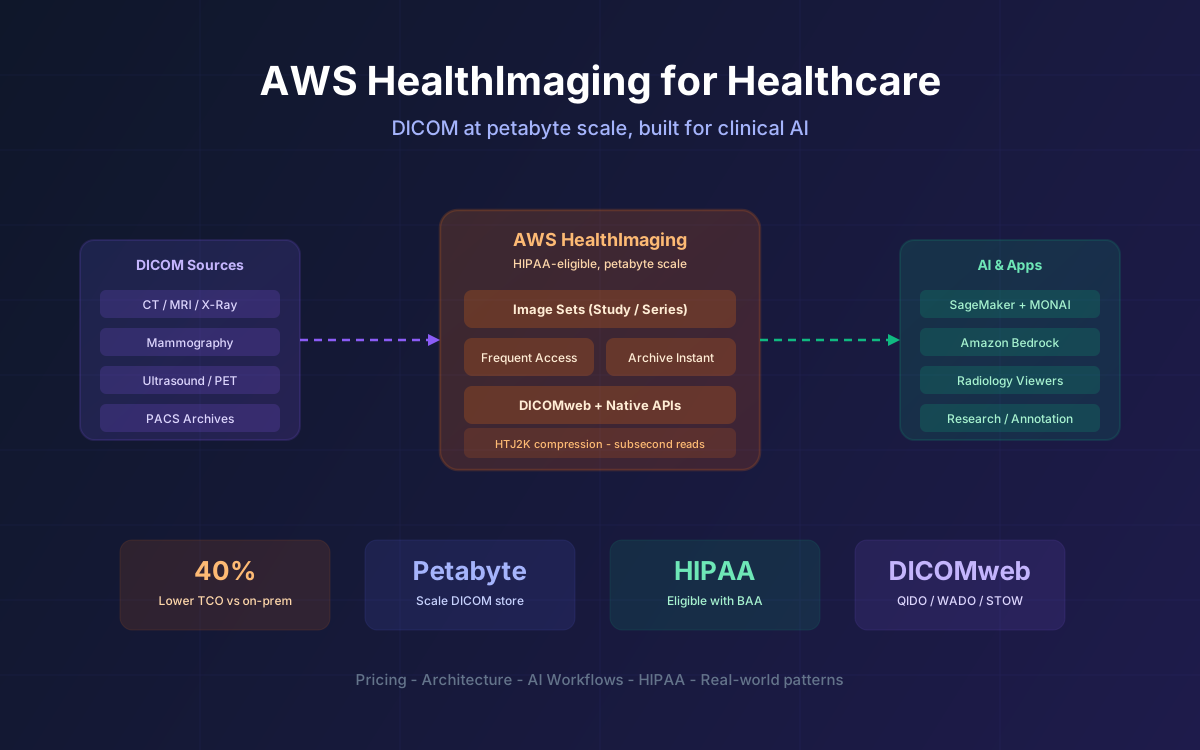
AWS HealthImaging for Healthcare: DICOM at Petabyte Scale, Pricing, Architecture & AI Workflows
AWS HealthImaging is the HIPAA-eligible DICOM store powering modern medical imaging platforms. We cover pricing, reference architecture, AI workflows with SageMaker and Bedrock, HIPAA guardrails, migration from legacy PACS, and how Lushbinary ships compliant imaging platforms on AWS.
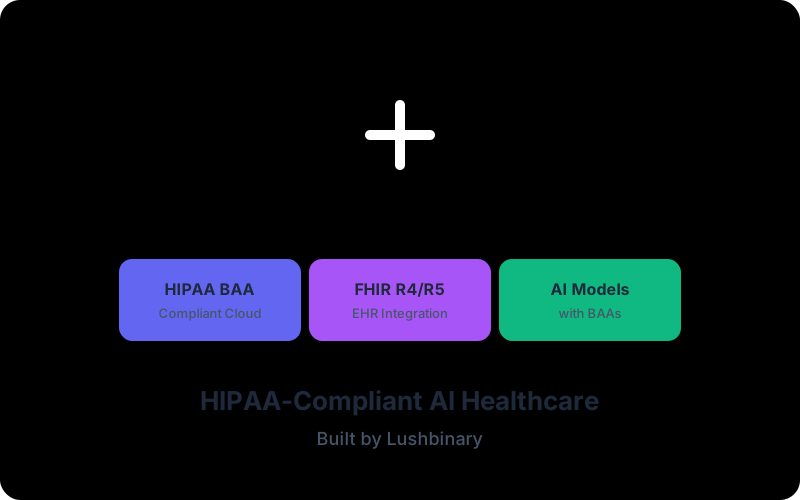
How to Build a HIPAA-Compliant AI Healthcare App: Architecture, BAAs & Cost
Healthcare is the hardest place to ship AI. This guide covers the reference architecture, BAA-eligible AI providers, FHIR integration with Epic and Oracle Health, FDA SaMD rules, and the real cost of building a production-grade AI healthcare app in 2026.
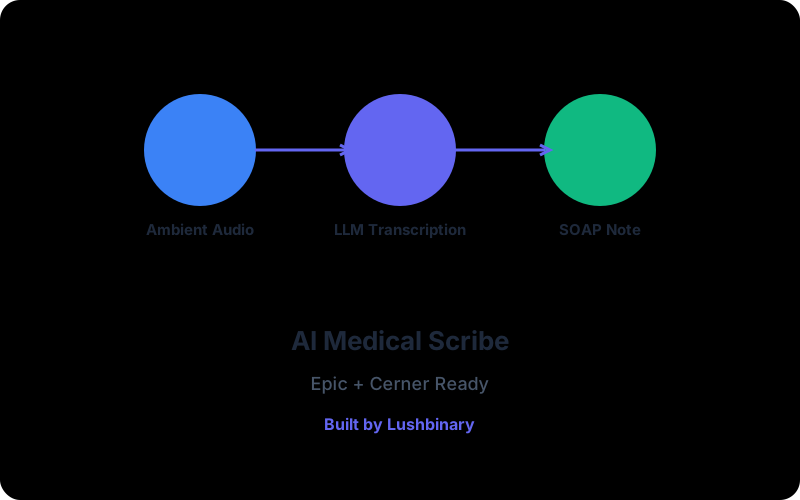
How to Build an AI Medical Scribe App: Epic & Cerner Integration Guide
AI medical scribes like Abridge and Nuance DAX are a $1B+ category. This guide covers ambient capture, Whisper and Nova-2 ASR, LLM note generation, Epic and Oracle Health integration, specialty templates, and the $180K to $2M cost of building a production scribe in 2026.
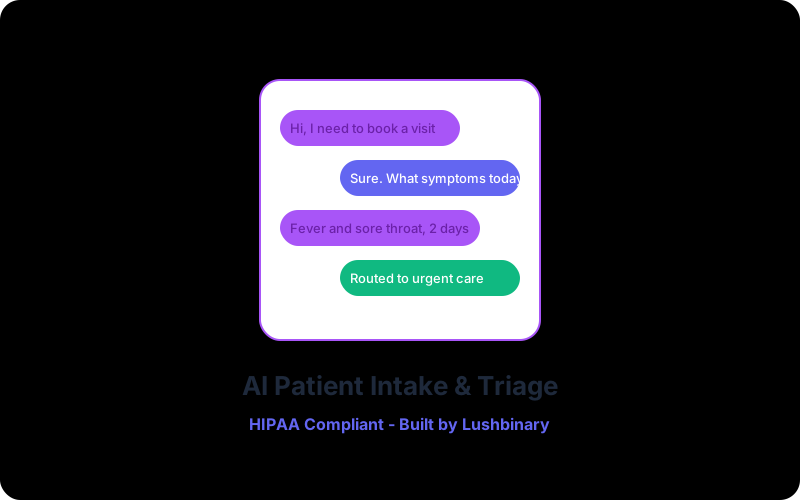
How to Build an AI Patient Intake & Triage Chatbot: HIPAA-Compliant Guide
AI patient intake chatbots deflect 40% of call volume, push completion above 90%, and cut claim denials with real-time eligibility. This guide covers voice and chat architecture, safety-first triage, Epic and athenahealth integration, and $90K to $1.5M cost.
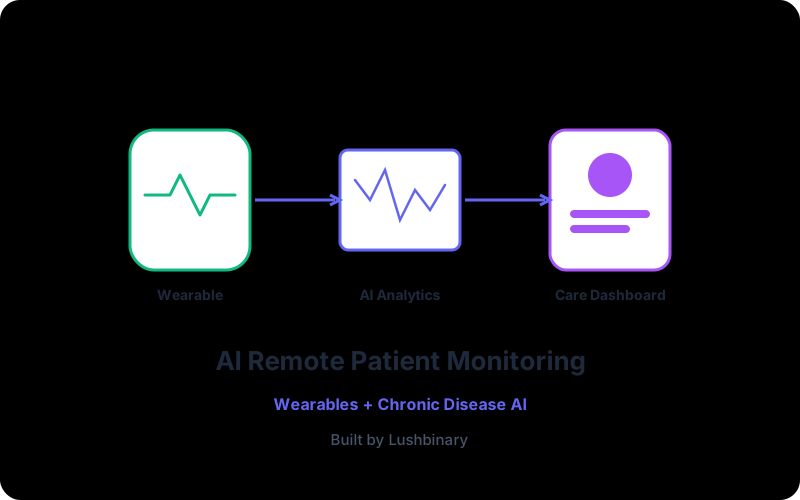
How to Build an AI Remote Patient Monitoring App: Wearables, CMS Billing & Cost
RPM is reimbursed by CMS under CPT 99453-99458 and managed by AI summarization instead of alert fatigue. This guide covers HealthKit, Dexcom, HiCardi, and Omron integration, AI alerting, billing documentation, and $200K to $2.5M build costs.
How to Build an AI Mental Health App: FDA SaMD, Safety & Clinical Guide
AI mental health apps like Wysa and Woebot show digital CBT works, but the regulatory bar is high. This guide covers wellness vs clinical archetypes, FDA SaMD strategy, safety architecture, evidence-based content, and $140K to $2.5M cost.
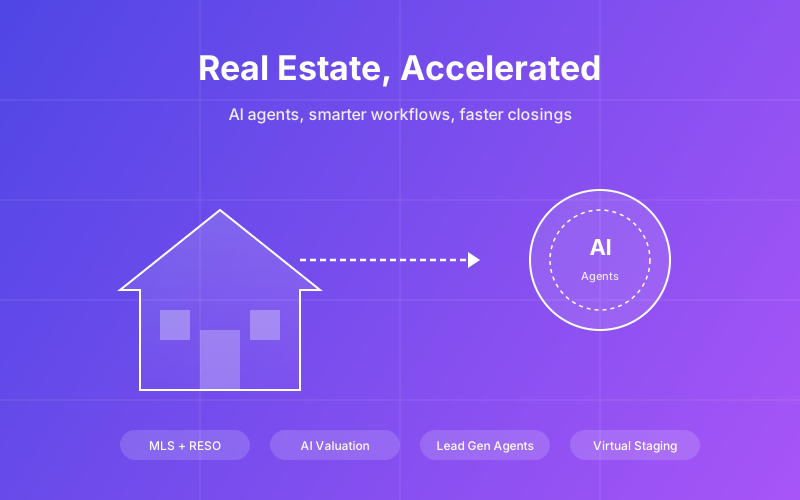
How AI Accelerates Real Estate Brokerages in 2026: The Complete Playbook
82% of real estate pros now use AI. Here is the full map: the 7 workflows with real ROI, the tech stack, Fair Housing guardrails, and how to ship a pilot in 6-10 weeks.
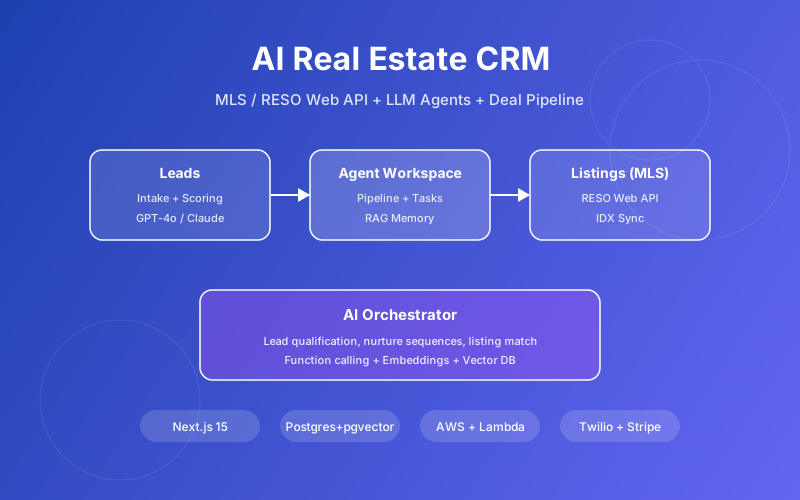
Build an AI-Powered Real Estate CRM: MLS Integration, Agents & Compliance Guide
Follow Up Boss bolts on AI. Here is how to build an AI-native real estate CRM: RESO Web API, multi-agent mesh, Twilio voice, Fair Housing filters, and what it really costs.
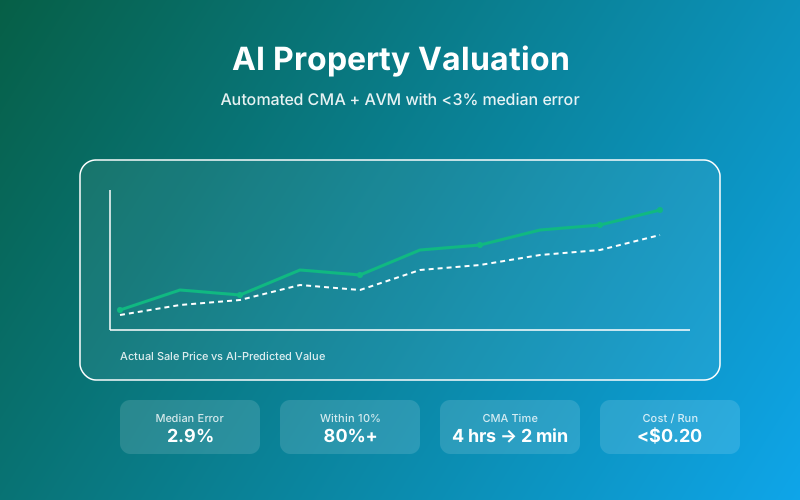
Build an AI Property Valuation System: AVM, Automated CMA & Computer Vision Guide
Top AVMs hit 2.9% MdAPE and 80%+ within 10% of sale price. Here is how to build an AI valuation system: AVM modeling, computer vision for condition, LLM CMA narrative, and fairness audits.
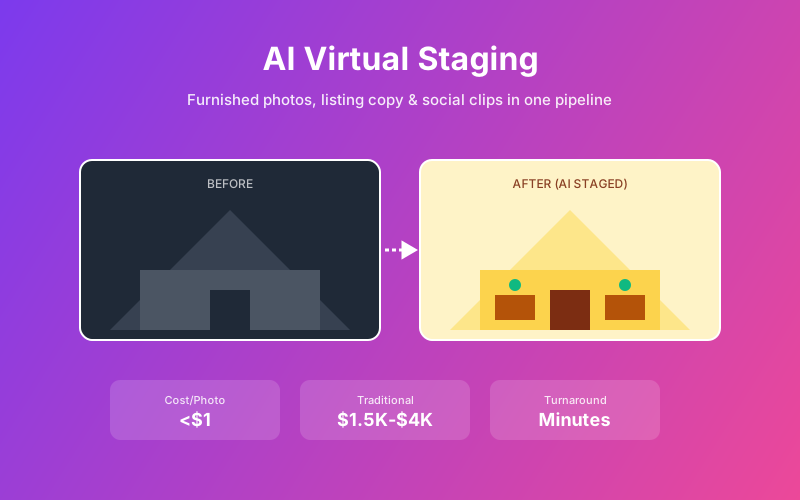
AI Virtual Staging & Listing Automation: The 2026 Real Estate Pipeline Guide
AI staging hits $0.23-$5/image vs $1,500-$4,000 traditional. Here is the full listing automation pipeline: staging, descriptions, clips, MLS compliance, and per-listing cost under $5.
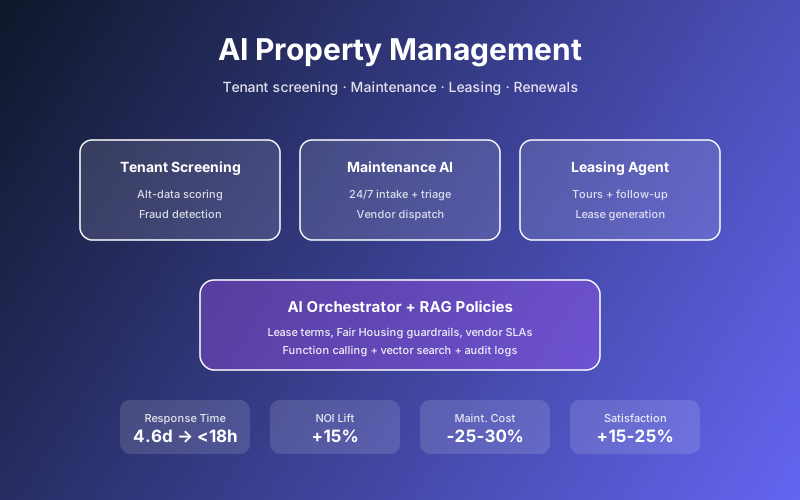
Build an AI Property Management Platform: Screening, Maintenance & Leasing Guide
Maintenance response 4.6d to 18h, 15% NOI lift, 20-35% lower operating costs. Here is how to build an AI property management platform with FCRA, Fair Housing, and TCPA compliance.
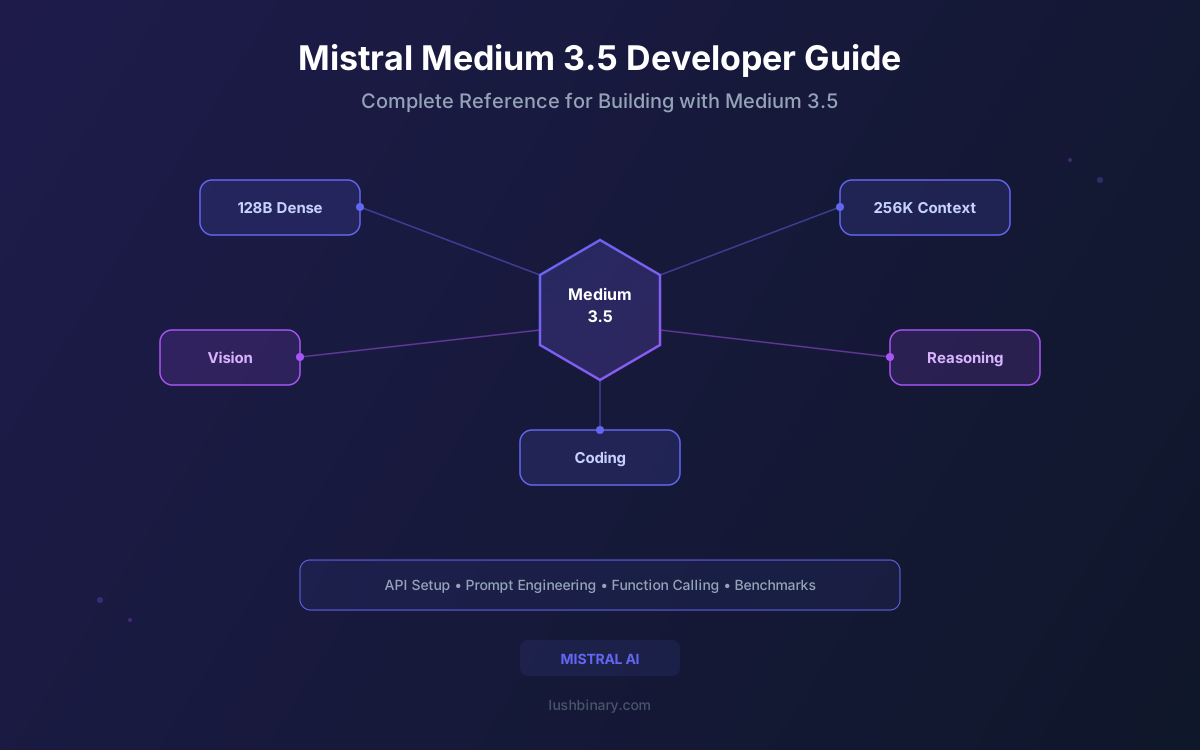
Mistral Medium 3.5 Developer Guide: Architecture, API, Benchmarks & Pricing
Mistral Medium 3.5 is a 128B dense model with 256K context, 77.6% SWE-Bench, and open weights. Complete developer guide covering API integration, self-hosting, vision, and pricing.
Ship Better Engineering, Every Week
Practical writing on AI agents, cloud architecture, and product teardowns. Read by builders at startups and Fortune 500s.
- New deep-dives on AI agents and cloud architecture
- Engineering teardowns of shipped products
- No spam, unsubscribe in one click
We respect your inbox. Read our privacy policy.